
New Jersey’s budget committee has an immediate opportunity to correct a long-standing inequity in the funding of traumatic brain injury (TBI) services by advancing Senate Bill S-438/Assembly A-4485 . This legislation addresses a systemic reimbursement gap that threatens access to community-based care, drives unnecessary institutionalization, and increases long-term costs to taxpayers.
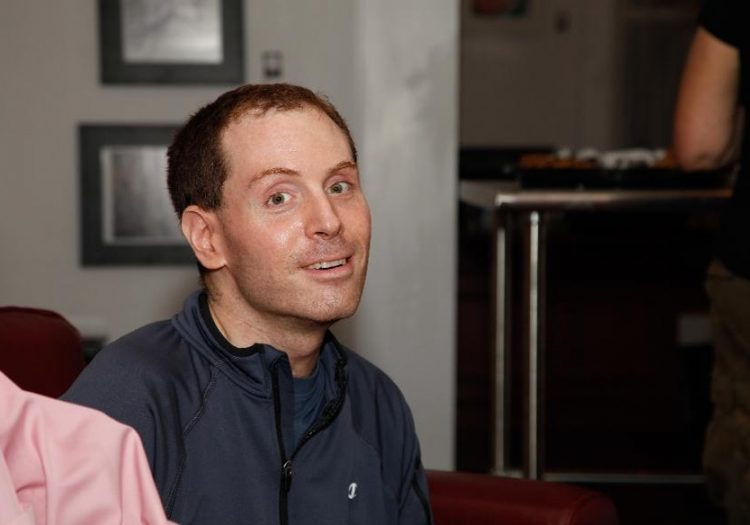
In 2009, a vibrant young man named Gregory was struck by a car as a pedestrian, a devastating accident that left him in a six-month coma, followed by a year of intensive hospitalization. He survived, but his life was permanently altered by a severe traumatic brain injury (TBI) and a stroke that paralyzed his right side.
For the last 24 years, Gregory’s mother, Barbara Young, has been his fiercest advocate. Today, Gregory resides in a community group home and receives vital care through the Universal Institute.
Though he is not an individual in NeuroRestorative’s programs, his story represents hundreds of individuals with similar life-altering brain injuries who depend on community-based programs to maintain stability, dignity, and connection. It is a crisis of sustainability, equity, and basic human dignity—one that the legislature’s budget committee has the immediate power to fix by passing Senate Bill S-438/ Assembly A-4485 .
The System They Depend On
Gregory is one of approximately 350 state-funded TBI individuals with a brain injury receiving services in community residential settings across New Jersey.
Each day, they attend structured day programs where they participate in rehabilitation, skill-building, and community engagement. In many cases, these programs are shared with people from the Division of Developmental Disabilities (DDD), in the same settings, with the same staff, and the same level of supervision.
Yet the funding system does not treat them equally.
The Policy Program S-438/A-4485 Addresses
New Jersey’s reimbursement structure for TBI day services has not been meaningfully updated since 1994.
- For every hour a provider serves a DDD individual in these day programs, the state reimburses them up to $93.96.
- TBI individuals receiving the exact same care, the reimbursement rate is a staggering $14.60 per hour.
This is not a difference in care delivery. It is a difference in how the state values and funds
What This Means
When community programs weaken or disappear, individuals with TBI do not simply lose programming – they lose their ability to remain in community-based settings “The State’s failure to update TBI reimbursement rates is effectively pushing this vulnerable population into more costly institutional settings—away from their communities, families, and support systems—and into environments where outcomes are demonstrably worse,” said Barbara Young.
Providers are being forced into:
- Reducing services
- Closing specialized TBI capacity
- Limiting or refusing new admissions.
The result is often placement in more restrictive and more expensive institutional care.
Fiscal Reality
This is where the budget committee faces a critical choice. Passing S-438/A-4485 is a profound cost-saving strategy.
- Institutional care costs approximately$182,500 more per person per year than a community program under S-438/A-4485 .
- If just one-quarter of New Jersey’s 350 community-placed TBI residents are forced into nursing homes due to provider closures, it will cost taxpayers an additional $16 million annually.
Delaying action does not save money. It simply shifts the burden to a far more expensive institutional setting while stripping individuals of their independence.There is hope on the horizon. New Jersey has already demonstrated a commitment to community integration and equitable care for individuals with brain injuries. Gregory’s story reflects what is at stake. The policy reflects what must change.
S-438/A-4485 will:
- Stabilize the TBI provider network
- Preserve community-based service capacity
- Prevent avoidable institutionalization
- Align reimbursement with actual service costs
- Reduce long-term state expenditures
Help us make a difference: reach out to the budget committee members today and encourage them to pass S-438.
The Honorable Paul Sarlo, Chair, Senate Budget and Appropriations Committee: [email protected], Chairman Sarlo
The Honorable Lisa Swain, Chair, Assembly Appropriations Committee: [email protected], Chairwoman Swain
The Honorable Brian Stack, Senator (Sponsor of S-438): [email protected], Senator Stack
The Honorable Verlina Reynolds-Jackson, Assemblywoman (Sponsor of A-4485): [email protected], Assemblywoman Reynolds-Jackson
The Honorable Nicholas P. Scutari, Senate President: [email protected], Senate President Scutari
The Honorable Craig J. Coughlin, Assembly Speaker: [email protected], Speaker Coughlin
The Honorable M. Teresa Ruiz, Senate Majority Leader: [email protected], Leader Ruiz
The Honorable Louis D. Greenwald, Assembly Majority Leader: [email protected], Leader Greenwald
The Honorable Anthony M. Bucco, Senate Republican Leader: [email protected], Leader Bucco
The Honorable John DiMaio, Assembly Republican Leader: [email protected], Leader DiMaio
The Honorable Eliana Pintor Marin, Chair, Assembly Budget Committee: [email protected], Chairwoman Pintor Marin